
Rounded, hidden, undeclared: reading public subscriber data correctly
Three features of public YouTube channel data change what a figure means: rounding, hidden counts and fields that are blank because nobody declared them.
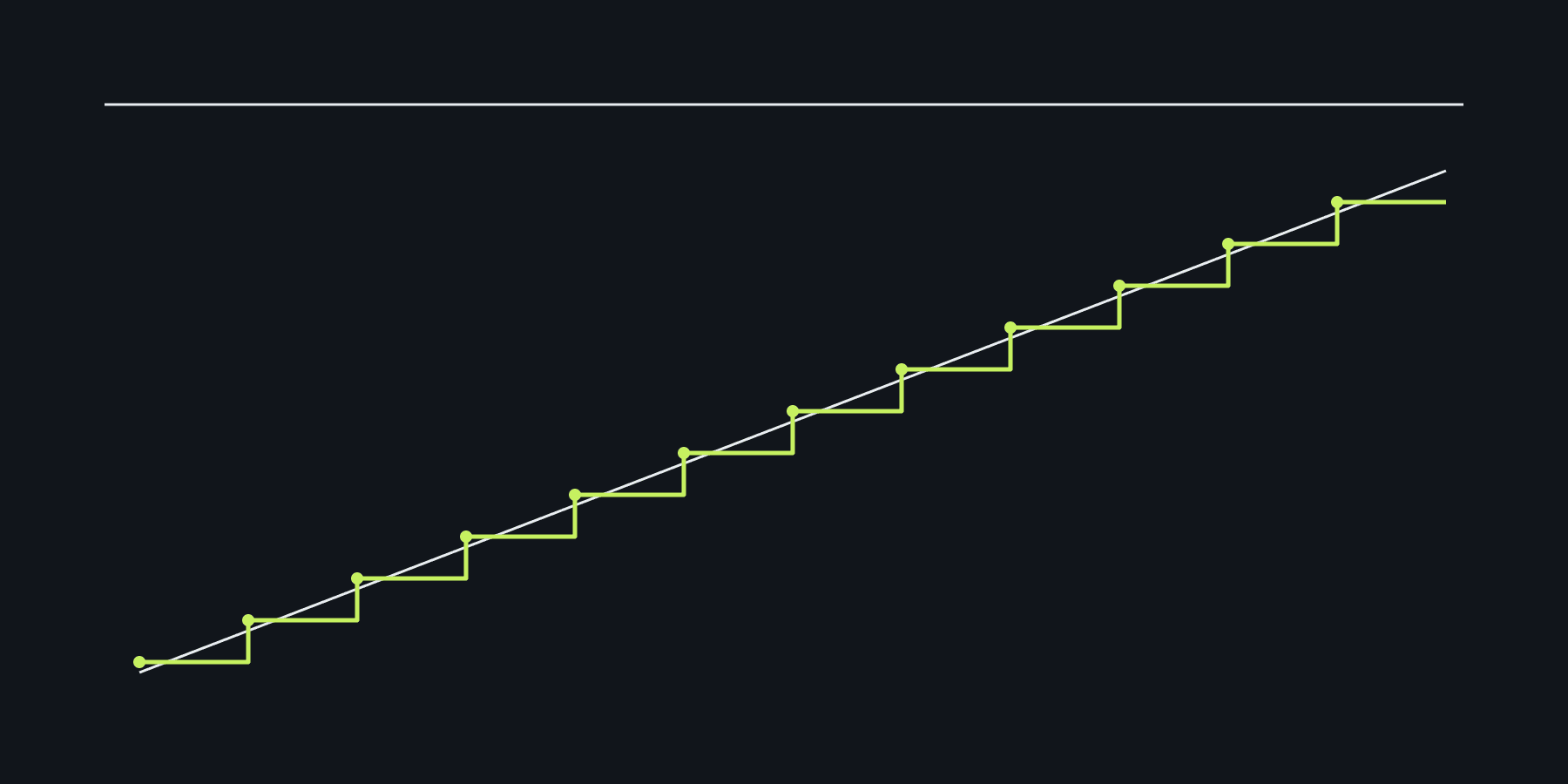
Public channel statistics look precise. Three things about them are easy to miss.
Counts are rounded to three significant figures
In a sample of 21,779 channels above 10,000 subscribers, every count between 10,000 and 99,999 was a multiple of 100, every count between 100,000 and 999,999 a multiple of 1,000, and every count above a million a multiple of 10,000. Not one value broke the pattern.
The practical effect is on growth. A channel at 10,000 subscribers that gains 99 more is still reported as 10,000. Small channels can look flat for weeks and then jump a full step. Growth figures on this platform are computed from the published values and labelled as such.
Hidden counts are rare
Creators can hide their subscriber count. In this store only 1,026 of 233 million records do so, and every one of them is also missing its count, so the flag and the blank agree exactly. Hidden counts are not a meaningful gap in subscriber-based analysis.
Blank does not mean no
Two fields are easy to misread:
- made_for_kids is filled in for 4.9% of records. The other 95% are blank because no audience setting was declared, not because the channel is not for children. Among channels above 10,000 subscribers the field is filled in for about half.
- self_declared_made_for_kids is blank for every record. YouTube returns it only to the channel's owner, so no outside dataset can fill it.
Country is similar: 9.2% of all records declare one, rising to 69% among channels above 10,000 subscribers. A missing country is shown on this platform as "not declared", never guessed.